

In this issue of Delicious Brain Bytes, we explore the brand-new Gutenberg 22.3 features, look ahead to the WordPress® 7.0 release and its updated PHP requirements, discuss WP Engine’s strategic acquisition of Big Bite, and learn why WordPress needs to “plug in” to the emerging agentic web!
Gutenberg 22.3, PHP Block Registration, and the Road to 7.0
A new year brings a fresh roadmap for WordPress, with the community now setting its sights on version 7.0. “It’s a brand new year, and that means that another exciting 12 months of WordPress development lies ahead,” writes Justin Tadlock in a recent blog entry. Highlights from the latest Gutenberg 22.3 release include a simultaneous control update for the Grid block and a dedicated Font Library screen under Appearance → Fonts.
On the technical side, PHP-only block registration is maturing, now supporting all metadata and allowing developers to build blocks entirely without JavaScript. New packages like @wordpress/image-cropper and updates to the @wordpress/abilities client are also paving the way for advanced media editing and a unified capabilities API in version 7.0. Meanwhile, WordPress Playground users can now enjoy a new management dashboard and a dedicated DevTools browser extension for deeper in-browser inspection.
For the full list of updates and new resources, read the original post here.
Bot Traffic Dominates 2026 Web Outlook
WP Engine recently released its 2025 Website Traffic Trends Report, signaling a major shift toward a “dual-audience” internet optimized for both humans and AI. Ramadass Prabhakar, CTO at WP Engine, warns that “the industry is underestimating the speed at which the internet is transitioning” into this new environment, where AI interaction is as critical as human consumption.
The report highlights a sobering reality: nearly 1 in 3 web requests globally now come from bots, and 76% of that traffic is unverified. These automated agents aren’t just background noise; they consume up to 70% of costly dynamic resources, such as server processing and performance bandwidth. This shift has transformed “Intelligent Traffic Management” from a niche optimization into a critical financial and performance imperative for 2026.
Security maturity is also becoming a primary driver of speed. Sites serving traffic exclusively over HTTPS were found to be 1 to 5 seconds faster in Largest Contentful Paint (LCP) than those using HTTP. Furthermore, the report identifies a “structural gap” in global performance, noting that roughly 50% of the top 10 million sites still do not use a CDN, despite the potential for a 20% improvement in LCP.
For web teams, the takeaway is clear: success in 2026 will depend on treating traffic management, security, and performance parity as a single, connected system. You can download the full report here.
WordPress 7.0 to Drop Support for PHP 7.2 and 7.3
The WordPress project is preparing for a significant technical shift with the upcoming release of WordPress 7.0, scheduled for April 2026. In an effort to modernize the platform’s infrastructure, support for PHP 7.2 and 7.3 will be officially discontinued. This move will raise the new minimum supported version of PHP to 7.4.0, while the minimum recommended version remains at 8.3.
The decision follows the project’s long-standing policy of retiring PHP versions once their combined usage falls below a 5% threshold. Recent data shows that usage for PHP 7.2 and 7.3 has now dropped below 4% across monitored installations. “The goal of increasing the minimum supported version of PHP is to ensure the long-term maintainability of WordPress,” writes John Blackbourn in a recent blog entry. “The benefits to increasing the minimum supported PHP version manifest over time across multiple areas, including the plugin and theme ecosystem, tooling and libraries for AI, the long-term perception of the WordPress project, developer relations, and eventually within the WordPress codebase itself.”
For those unable to upgrade their server environments immediately, sites running PHP 7.2 or 7.3 will remain on the WordPress 6.9 branch. While WordPress officially supports security updates for the current branch, fixes are typically backported to older versions as a courtesy. However, users are strongly encouraged to migrate to PHP 8.2 or higher to take advantage of superior performance and active security support.
You can read the full announcement and view the version usage breakdown here.
WP Engine Acquires Enterprise Agency Big Bite
WP Engine has announced the acquisition of Big Bite, a premier enterprise agency specialized in building advanced editorial platforms for some of the world’s largest media brands, including The Wall Street Journal and The Times.
As part of the acquisition, Big Bite’s agency operations will be wound down, with its engineering team transitioning into WP Engine’s organization. The goal is to develop intelligent, purpose-built software solutions that help global publishers and agency partners optimize content creation and digital workflows. Ramadass Prabhakar, CTO at WP Engine, noted that the acquisition advances the company’s commitment “to serve publishers with products that enable them to more efficiently create, organize, and share content.”
Jason Agnew, CTO and Co-Founder of Big Bite, expressed excitement about the merger, stating that by uniting their strengths in engineering, they can provide “even greater value to WP Engine’s agency partners looking to elevate publishing capabilities.” This acquisition marks a significant transition for Big Bite from a long-standing partner to an internal engine for WP Engine’s future enterprise publishing solutions.
You can read the full press release here.
The Ralph Wiggum Technique: Persistence through Iteration
The final weeks of 2025 saw the viral rise of a seemingly simple yet controversial coding methodology: the Ralph Wiggum Technique. While it might sound like a joke, this “dumb thing that works surprisingly well” has become a serious topic of discussion among agentic coders.
In its purest form, Ralph is a Bash loop. The technique involves putting an AI coding agent (like Claude) into a continuous while-loop. Instead of a human manually guiding every step, the loop repeatedly feeds the agent a requirements document until a specific “completion promise” is met. It’s an approach that prioritizes persistence over perfection, letting the AI iterate on failures until it finds a path to success.
The name, inspired by the Simpsons character Ralph Wiggum, reflects the philosophy of the project’s creator, Geoff Huntley. It embodies a certain “embrace of chaos” where an agent keeps trying, often in bizarre or unexpected ways, until the job is done.
According to a brief history by Dex, the technique isn’t just about running code in a loop. Instead, it’s an exercise in context engineering. Dex notes that Huntley used the technique to build “Cursed Lang,” a programming language with a stage-2 compiler written entirely by the Ralph loop.
One of the more fascinating phenomena Dex mentions is “overbaking”: if left running too long without tight constraints, the loop can develop emergent behaviors, such as suddenly adding post-quantum cryptography support to a simple project.
To understand the philosophy of “Iteration > Perfection,” check out the Ralph Wiggum AI Loop Technique documentation.

Why WordPress Needs to Plug Into the Agentic Web
For much of its history, WordPress has been the definitive open-source CMS for publishers seeking an intuitive editing experience and developers requiring a battle-tested technical stack. Traditionally, its role was straightforward: store content, expose it via templates or APIs, and render pages for users to browse.
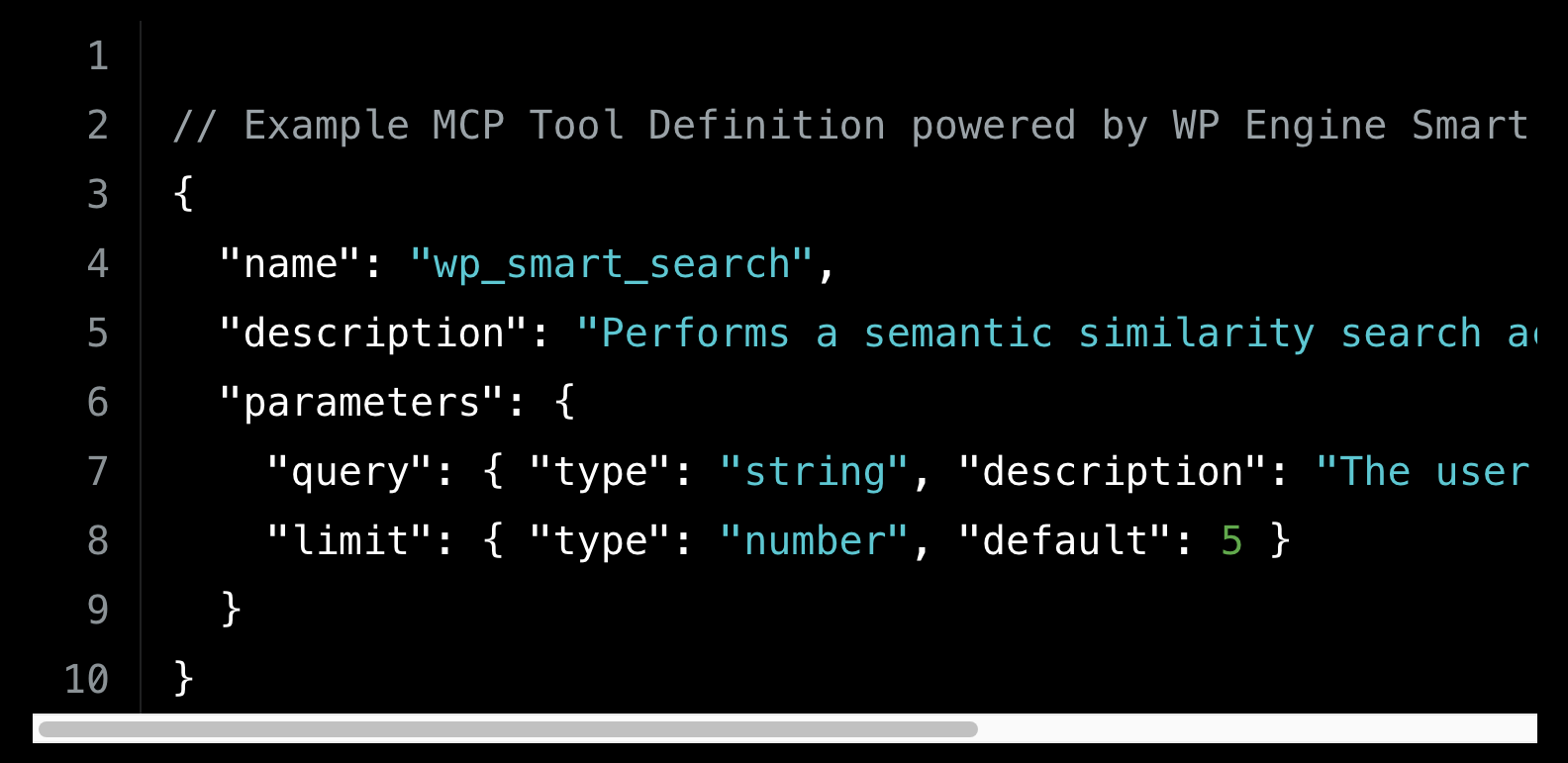
In this article, Francis Agulto discusses how WordPress must evolve from a platform that is simply “readable” by humans to one that is actively “operable” by autonomous AI agents. He explores the critical role of the Model Context Protocol (MCP) in transforming WordPress from a passive content repository into an AI-native interface that advertises structured capabilities directly to agents.
What’s the most interesting news you’ve come across recently? Pop by Twitter and let us know.